
Wardrobe Storage Ideas: How to Organise a Bedroom Efficiently
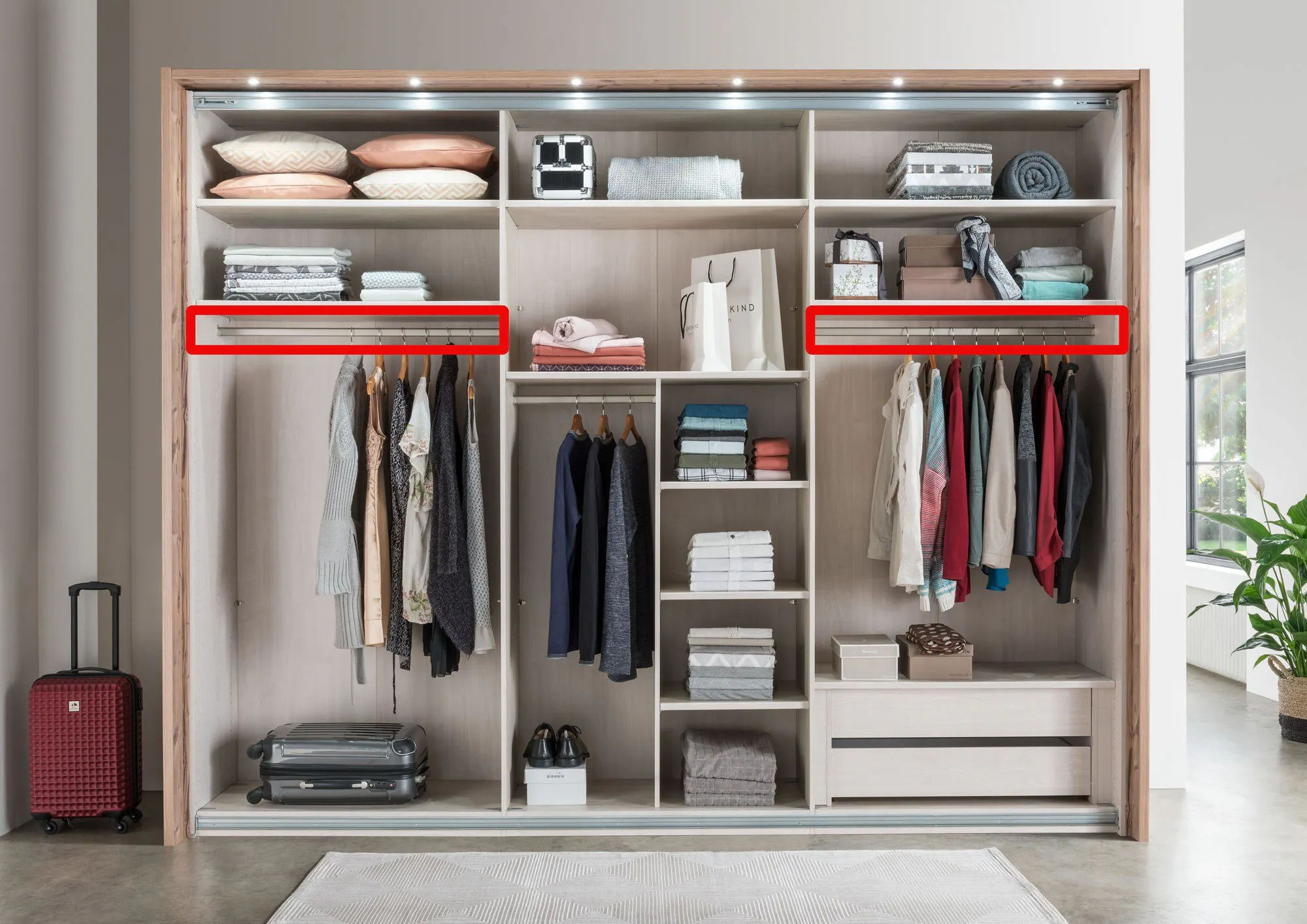
The best way to organise a bedroom wardrobe is to give every type of clothing a place. Keep everyday outfits at eye level, use drawers or dividers for smaller items, move seasonal clothes to higher shelves and choose storage that suits the way you actually dress. Good wardrobe storage ideas make things easier to find without cramming more into the room.
You know that moment when you open your wardrobe, can't find the jumper you want and somehow end up with half your clothes on the bed? It usually isn't a case of needing more hangers. It's a sign that the space isn't working particularly well.
Whether you have a compact two-door wardrobe or a full wall of storage, the aim is the same: make getting dressed easier and leave your bedroom feeling less cluttered. Here are practical ways to do it, starting with what you've already got.
How to Organise a Wardrobe: Start with a Simple Reset
Before buying baskets or extra shelves, take everything out of the wardrobe. It sounds like a bigger job than it is, but you need to see what you're working with.
Step 1: Sort clothes by how you use them
Make four groups: clothes you wear regularly, occasional outfits, out-of-season items and things you no longer use. Try on anything you're unsure about. Don't return clothes to the wardrobe just because there's room for them.
Step 2: Measure the space you've actually got
Measure shelf widths, depths, hanging space and drawer interiors. Note any awkward gaps, fixed shelves or door hinges. A divider that doesn't fit or a storage box that's too deep creates more frustration, not less.
Step 3: Give the easiest spaces to everyday clothes
Put the things you reach for most between waist and shoulder height. Keep occasional clothes higher up or further to the side. Shoes, heavy bags and other bulky items generally belong lower down, where they're easier to lift safely.
Step 4: Put everything back in clear categories
Group similar things together: workwear, casual clothes, knitwear, accessories and so on. Leave a little breathing room between hangers. If you have to push clothes aside just to see what's there, the rail is probably too crowded.
10 Wardrobe Storage Ideas That Make a Real Difference
1. Divide the wardrobe into everyday zones
Think of the wardrobe in three parts: the middle for daily clothes, the top for less-used items and the bottom for shoes or storage boxes. This simple arrangement is easier to maintain than organising everything by colour alone.
If you're choosing a new modern wardrobe, look at the internal layout just as carefully as the doors and finish. A good mix of rails, shelves and drawers is often more useful than a large empty compartment.
2. Use two hanging levels where they make sense
Two rails can be particularly useful for shirts, blouses, shorter jackets and folded-over trousers. Long dresses, coats and maxi garments still need a full-height section, so don't turn every compartment into double hanging space.
Before fitting another rail, check the available height and the length of your clothes on hangers. The bottom row should not brush against shoes or the wardrobe base.
3. Keep knitwear and T-shirts on shelves
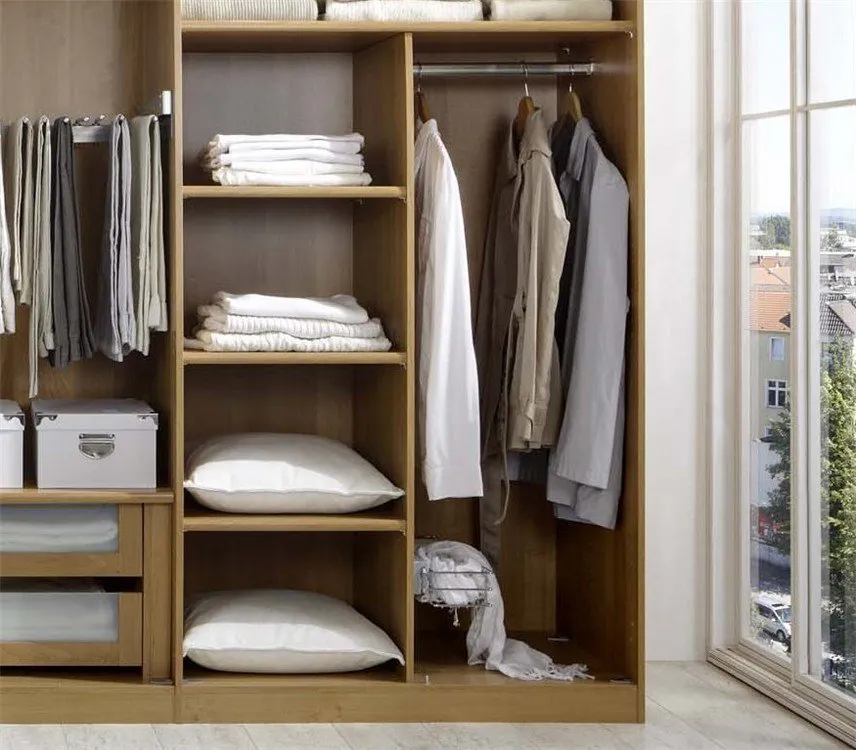
Heavy jumpers can stretch when left hanging for long periods. Fold them into short, manageable stacks so you can see what's available. Shelf dividers can stop one stack from falling into another.
Don't pile everything from floor to ceiling. Smaller stacks are much easier to keep tidy, especially during busy mornings.
4. Add drawer dividers for the small things
Socks, underwear, belts and everyday accessories tend to disappear into deep drawers. Divide each drawer into sections and fold items so they can be seen from above rather than buried underneath one another.
A set of well-organised drawers also means you won't need a separate container for every little item.
5. Make the upper shelves work harder
Top shelves are useful for spare bedding, occasionwear, holiday clothes and seasonal pieces. Put them in labelled, breathable storage bags or suitable boxes to keep groups together.
Avoid storing anything very heavy where it will be difficult to retrieve. And don't fill the shelf so completely that you have to remove three boxes to reach one.
6. Use the wardrobe's depth properly
Deep shelves can be surprisingly wasteful because things get lost at the back. For smaller items, try pull-out organisers or two clearly separated rows, with less-used items behind.
Before buying accessories, check compatibility with the wardrobe. Head2Bed also has wardrobe interior accessories for selected designs, so it's worth checking what is available for the specific model.
7. Store shoes where you can see the pairs
A bottom shelf, pull-out shoe rack or neat row of shoes often works better than a large pile. Keep the shoes you wear daily near the front; put special-occasion pairs into labelled boxes.
Let shoes dry and air before storing them inside an enclosed wardrobe, particularly after wet weather.
8. Give bags and accessories their own space
Keep handbags upright on a shelf where possible, and use smaller compartments for jewellery, watches, scarves and belts. Avoid hanging heavy bags from rails or fittings that weren't designed to take their weight.
9. Use a chest of drawers when the wardrobe is doing too much
Not everything needs to fit behind wardrobe doors. If shirts and dresses are competing with stacks of bedding and knitwear, moving folded clothes into a chest of drawers can free valuable hanging space.
A tall, narrow chest may suit some bedrooms better than another wide wardrobe, but check its footprint and safe placement first.
10. Leave some room for clothes coming back from the wash
A wardrobe filled to the last centimetre is difficult to keep tidy. Leave a little space on the rail or a shelf so clean laundry can go straight back where it belongs.
Which Wardrobe Layout Is Best for Your Clothes?
The best arrangement depends on what you own, not just the size of the unit.
| What you store most | Useful wardrobe layout | Practical tip |
|---|---|---|
| Shirts and shorter garments | Two hanging levels | Keep frequently worn pieces together |
| Long dresses and coats | Full-height hanging area | Allow space below the hems |
| Jumpers, denim and T-shirts | Adjustable shelves or drawers | Make small stacks or file-fold |
| Shoes and handbags | Low shelves and dedicated compartments | Store heavier pieces down low |
| Accessories and underwear | Shallow drawers and dividers | Separate by type |
| Spare bedding and seasonal clothes | Upper shelves or separate bed storage | Label and rotate seasonally |
If you share a wardrobe, giving each person a defined section usually works better than mixing everything. You can still share space for coats, spare bedding and other occasional items.
Wardrobe Storage Ideas for Small Bedrooms
In a smaller bedroom, a wardrobe has to work hard without making it difficult to walk around the bed or open drawers.
Choose sliding doors if there's little clearance
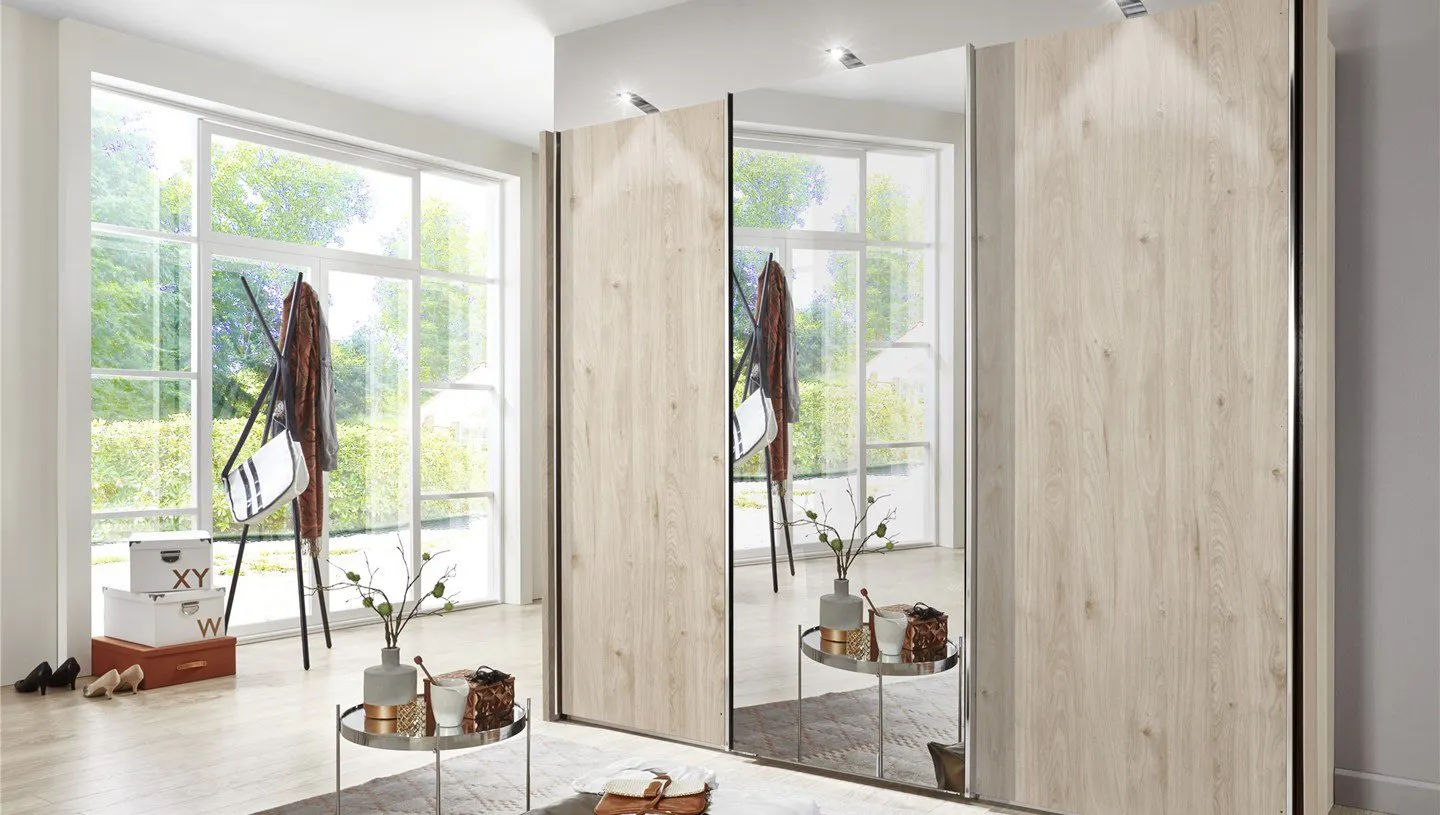
A sliding-door wardrobe doesn't need room for its doors to swing into the bedroom. That's helpful where the wardrobe sits opposite a bed or close to a bedside unit. Remember, though, you can generally only open part of the wardrobe at a time.
Consider a wardrobe with built-in drawers
A combi wardrobe combines hanging and drawer storage in one piece of furniture. It may reduce the need for an additional chest, depending on how much clothing you own.
Use height rather than taking over another wall
A taller wardrobe can hold items you rarely use on its upper shelves while keeping everyday clothes lower down. Measure ceiling clearance, doorways and the space needed to assemble the wardrobe before you buy.
Choose mirrors for function, not just appearance
Mirrored wardrobes can replace a separate full-length mirror and reflect light around the room. But a mirror doesn't improve the internal storage, so compare the rails and shelving too.
For more layout ideas, read our guide to wardrobe ideas for small bedrooms.
Sliding vs Hinged vs Combi Wardrobes: Which Is Easier to Organise?
The door style affects how easily you reach the inside, but no single type is best for everyone.
| Wardrobe type | Main advantage | Worth considering |
|---|---|---|
| Sliding doors | No outward door swing | Some sections remain covered when another is open |
| Hinged doors | Easy view of the full interior when open | Needs enough floor clearance in front |
| Combi wardrobe | Hanging and drawer storage in one unit | Check whether the drawer and rail balance suits your clothes |
If you prefer access to several compartments at once, hinged-door wardrobes may be a sensible choice. If the space in front is tight, sliding doors may be easier to live with.
Planning a wardrobe from scratch? Our guide to building your own wardrobe explains how to choose the size, doors and internal configuration.
What About the Rest of the Bedroom?
A well-organised wardrobe won't solve a bedroom that's crowded with bedding, books, chargers and other everyday belongings. Sometimes the solution is to move the right things elsewhere.
Keep bulky bedding out of the clothing space
Spare duvets, pillows and blankets occupy a surprising amount of shelf space. If you don't need them every week, an ottoman or storage bed can be a useful alternative, provided the bed's storage compartment is suitable for those items.
Put small essentials close to the bed
Use bedside tables with storage for the things you actually use at night, such as reading glasses, a book or a charger. Keeping those things out of the wardrobe makes mornings and evenings more straightforward.
Keep floors and walkways clear
Storage is only helpful when you can access it safely. Leave room for wardrobe doors, pull-out drawers and the route around the bed. For other space-saving furniture ideas, see our bedroom storage ideas for small bedrooms.
Wardrobe Organisation Mistakes to Avoid
- Buying organisers before measuring. A box that wastes half a shelf isn't an improvement.
- Putting everything on hangers. Some clothes store better folded, and too many hangers make a rail difficult to use.
- Keeping all seasonal clothes within easy reach. Your daily items deserve the accessible spots.
- Ignoring the door mechanism. A drawer that catches on a sliding door or hinge won't be much use.
- Overloading rails and shelves. Follow the wardrobe manufacturer's capacity and fitting guidance.
- Making the system too complicated. If putting a jumper away takes five steps, the system probably won't last.
How to Keep Your Wardrobe Tidy Every Week
A good system should take very little effort to maintain. Hang clean clothes in their assigned section, return accessories to their drawer and put worn items in the laundry rather than on a chair.
Once a week, straighten the shelves and return stray pieces to their places. When the seasons change, move rarely worn clothing up or out of the main wardrobe. You don't need to empty everything again unless your storage needs have genuinely changed.
✅ Quick wardrobe organisation checklist
- ☐ Everyday clothes are within easy reach
- ☐ Hanging sections have enough space between garments
- ☐ Folded clothes are in short, visible stacks
- ☐ Shoes and accessories have their own places
- ☐ Seasonal items are stored safely
- ☐ Doors and drawers open without obstruction
Make Your Wardrobe Work for Your Routine
An organised bedroom isn't one where every shelf looks like a showroom. It's one where you can find what you need without rummaging and put it away just as easily. Start with your daily routine, make the storage suit your clothes and leave enough room for the system to stay manageable.
If your current layout still isn't doing the job, browse Head2Bed's range of modern wardrobes and look for a balance of hanging space, shelves and drawers that fits your room as well as your belongings.
Frequently Asked Questions
What is the best way to organise a bedroom wardrobe?
Start by grouping clothes by type and frequency of use. Keep everyday items within easy reach, fold knitwear on shelves, use dividers for small accessories and move seasonal clothes to higher storage. The simplest system is often the easiest to maintain.
How can I maximise space in a small wardrobe?
Use vertical space carefully, consider double hanging for shorter clothes and add shelf or drawer organisers that fit your measurements. Remove things you no longer wear before buying extra accessories.
Is it better to fold or hang clothes in a wardrobe?
Hang clothes that crease easily, such as shirts, dresses and structured jackets. Fold heavy knitwear, T-shirts and many casual items. Always follow garment care instructions where they specify a storage method.
How do I organise deep wardrobe shelves?
Keep frequently used pieces near the front. Use appropriately sized pull-out baskets or separate front and back rows for occasional items. Avoid loose stacks that hide everything behind them.
What should I store on the top shelf of a wardrobe?
Use higher shelves for lightweight, infrequently used belongings such as seasonal clothing, spare bedding or labelled accessory boxes. Avoid anything so heavy or awkward that retrieving it becomes unsafe.
Are sliding wardrobes good for small bedrooms?
They can be, because their doors don't swing into the room. Check that the sliding panels still allow convenient access to hanging rails and drawers, and measure the available width and depth.
How should two people share one wardrobe?
Give each person dedicated hanging and shelf space, then allocate shared sections for spare bedding or accessories. Drawer dividers and labelled storage can help prevent belongings from becoming mixed together.
How can I organise my bedroom without buying new furniture?
Start by decluttering, moving everyday items into easy-to-reach areas, using the full height of existing shelves and giving each category a home. Rearranging what you already own can help before any new purchases.
What wardrobe accessories are most useful?
That depends on what you store. Drawer dividers help with smaller garments, adjustable shelves suit folded clothing, and shoe racks keep footwear visible. Check sizes and compatibility before ordering accessories.
How often should I reorganise my wardrobe?
A small weekly tidy is usually enough if your system works. Review seasonal clothing a couple of times a year and make bigger changes when your clothes, household or storage needs change.