
How to Build Your Own Wardrobe: Custom, Made-to-Measure & Modular Ideas
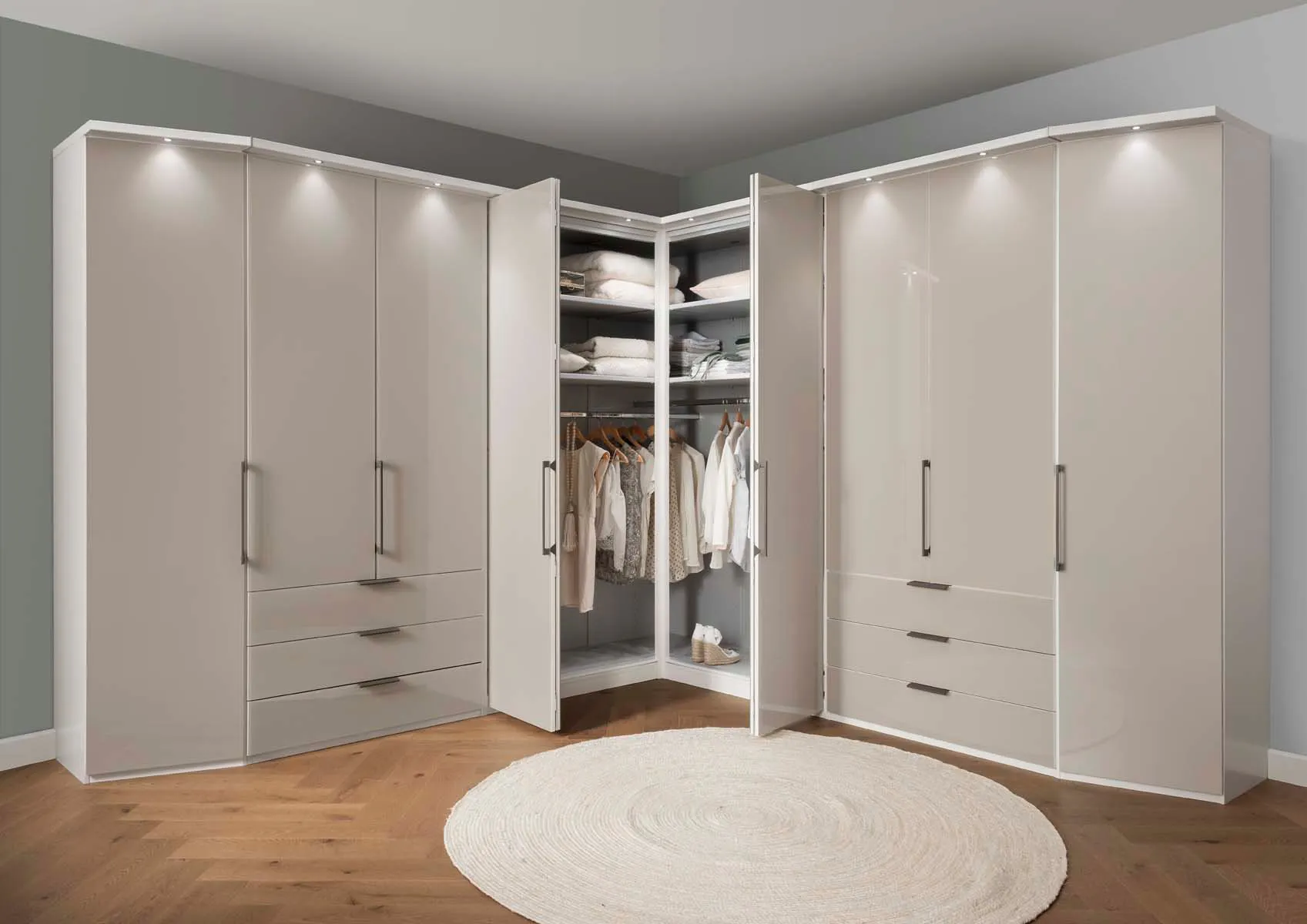
A customisable wardrobe lets you choose the dimensions, doors, finishes and internal storage to suit your bedroom and belongings. You can build your own wardrobe using a modular system, adapt a freestanding design or invest in a made-to-measure solution. The best option depends on your available space, budget, storage needs and whether you want flexibility or a permanent, fitted finish.
What Does a Customisable Wardrobe Mean?
A customisable wardrobe is a storage solution that allows you to select certain features to suit your room, style and everyday needs. Instead of choosing a standard wardrobe exactly as it comes, you can make decisions about its size, finish, door style, shelving, hanging rails and drawers.
The level of customisation depends on the type of wardrobe you choose. Some systems offer a selection of widths and finishes, while made-to-measure designs can be built around specific room dimensions.
For example, you might choose a wardrobe with sliding doors for a narrow bedroom, extra hanging space for long dresses or additional drawers for folded clothing and accessories.
What can you customise?
Common options include:
- Dimensions: Choose a suitable width, height and depth for your bedroom.
- Door styles: Select sliding, hinged, mirrored, glass or panelled doors.
- Finishes and colours: Match the wardrobe to your existing furniture, flooring or wall colour.
- Internal storage: Add shelves, drawers, hanging rails, shoe racks and accessory compartments.
- Layout: Divide the wardrobe into sections based on the types of clothing you own.
- Additional features: Depending on the system, you may be able to include internal lighting, soft-close mechanisms or pull-out storage.
Customisation makes it easier to avoid paying for features you do not need while creating a wardrobe that works with your available space.
Build Your Own Wardrobe: What Can You Customise?
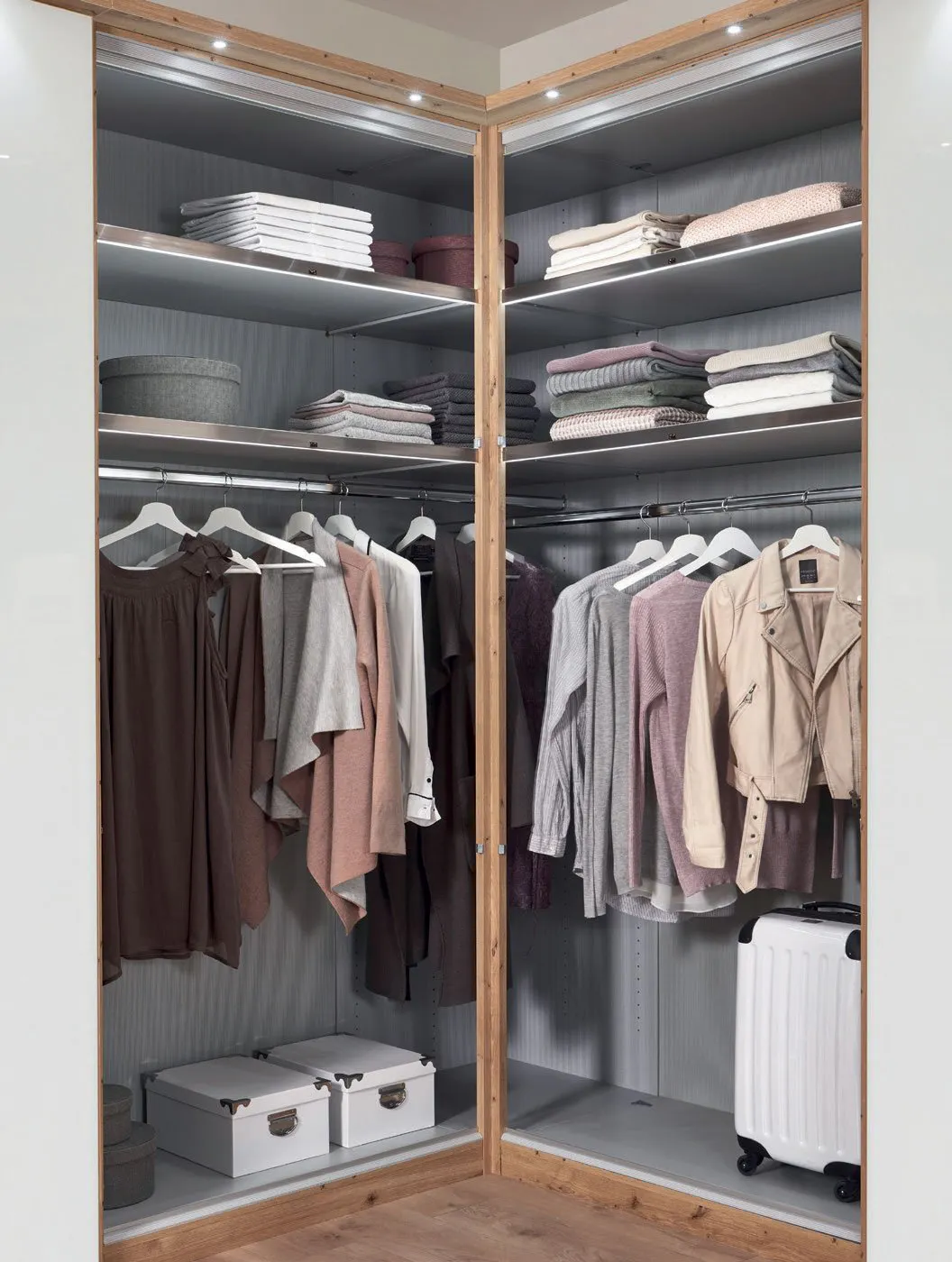
Building your own wardrobe does not necessarily mean cutting timber and assembling every component from scratch. You can create a personalised storage solution by selecting compatible wardrobe modules, adjusting the internal layout or choosing a made-to-measure design.
The right approach depends on how much control you want over the final result.
1. Wardrobe size and dimensions
Start with the available space. A wardrobe that is too wide can make a bedroom feel cramped, while one that is too small may not provide enough storage.
Consider the ceiling height, wall width, skirting boards, sockets and any sloping ceilings. You should also account for the clearance required to open doors and access drawers.
2. Internal storage layout
Think about what you need to store before choosing the internal configuration.
| Storage feature | Best for |
|---|---|
| Full-height hanging rail | Dresses, coats and long garments |
| Double hanging rails | Shirts, trousers and shorter garments |
| Adjustable shelves | Jumpers, folded clothing and bags |
| Internal drawers | Underwear, accessories and smaller items |
| Shoe racks | Shoes, trainers and footwear collections |
| Pull-out trays | Jewellery, watches and accessories |
| Top shelf | Seasonal clothing, bedding and luggage |
A practical wardrobe usually combines hanging space, shelves and drawers rather than relying on just one type of storage.
3. Wardrobe doors and finishes
Your door choice affects both the appearance and usability of the wardrobe. Sliding doors work well where floor space is limited, while hinged doors provide full access to the interior when opened.
Mirrored doors can help reflect light and make a compact bedroom feel more open. Wood-effect finishes create warmth, while white and other light colours can blend into a smaller room.
4. Accessories and additional features
Depending on your budget, you could add soft-close drawers, integrated lighting, pull-out trouser racks or dedicated compartments for accessories.
Prioritise features that solve a genuine storage problem. A simple, well-planned wardrobe is often more useful than an elaborate design filled with accessories you rarely use.
Custom Wardrobe vs Fitted Wardrobe: What's the Difference?
The terms custom wardrobe and fitted wardrobe are sometimes used interchangeably, but they describe different aspects of wardrobe design.
A custom wardrobe is designed around your preferences. It may be freestanding, modular or built into the room. A fitted wardrobe is installed to fit a particular space, often extending from wall to wall or floor to ceiling.
A wardrobe can be both custom and fitted if it is designed to your specifications and installed permanently in the room.
Custom vs Fitted Wardrobes
| Feature | Custom wardrobe | Fitted wardrobe |
|---|---|---|
| Main purpose | Personalised design and storage | Make efficient use of a specific space |
| Dimensions | Standard or made-to-measure | Usually designed around the room |
| Installation | Depends on the design | Usually professionally installed or assembled in place |
| Flexibility | Can be flexible if freestanding or modular | Generally less flexible once installed |
| Awkward spaces | Depends on the design | Can be designed around alcoves and sloping ceilings |
| Cost | Varies with materials and customisation | Often higher for complex designs and installation |
| Best suited to | Buyers who want tailored features | Rooms that need a space-specific solution |
Which should you choose?
Choose a customisable freestanding or modular wardrobe if you want control over the layout without committing to permanent installation.
A fitted wardrobe may be the better choice if you have an awkward alcove, an unusually shaped room or a strong preference for a seamless, built-in appearance.
Your decision should depend on the room, your budget and how long you expect to use the wardrobe in its current location.
What Is a Modular Wardrobe System?
A modular wardrobe system consists of individual storage units that can be combined to create a larger wardrobe. Each module performs a particular function, such as hanging clothes, storing folded garments or organising accessories.
Rather than designing an entirely bespoke wardrobe, you choose from compatible components and arrange them to suit your available space.
For example, a modular wardrobe might include one double-hanging section, a narrow shelving unit and a drawer module. You can select a configuration that fits your room and storage requirements.
Benefits of modular wardrobes
- Flexible layouts: Combine different modules to suit your clothing and available space.
- Scalable storage: Add compatible units later if your needs change.
- More predictable costs: You can compare individual components and control what you spend.
- Simpler installation: Many modular systems are designed for straightforward assembly.
- Choice of finishes: Available options vary by manufacturer but may include different colours, door styles and handles.
Are modular wardrobes right for you?
Modular wardrobes are particularly useful if you live in rented accommodation, expect to move house or want to expand your storage gradually.
They can also work well in small bedrooms because you can choose narrower units, taller sections and storage combinations that fit the room.
However, modular systems use predefined components. They may not fit every centimetre of an unusual space, and gaps can remain around the sides or above the wardrobe. If you need a completely seamless fit, a made-to-measure or fitted option may be more suitable.
How to Design Your Own Wardrobe
Designing a wardrobe becomes much easier when you start with practical requirements rather than appearance alone. Before choosing a finish or door style, establish how much space you have and what the wardrobe needs to hold.
Step 1: Measure your available space
Measure the width of the wall at more than one point, as walls and corners are not always perfectly straight. Check the height at both ends and in the middle if the ceiling is uneven.
Measure the depth available without obstructing walkways, doors, windows or other furniture. Include skirting boards, radiators, sockets and other features that could affect installation.
If the wardrobe will sit inside an alcove or beneath a sloping ceiling, measure the usable space carefully. For a made-to-measure design, confirm the final measurements and installation requirements with the supplier before ordering.
Step 2: List everything you need to store
Make a rough inventory of your clothing and accessories. Separate items that need hanging from those that can be folded.
For example, a wardrobe containing mostly dresses and long coats needs a different layout from one used mainly for shirts, trousers and knitwear.
Think about seasonal items too. Bedding, bulky winter clothing and luggage may require more space than you initially expect.
Step 3: Choose the right wardrobe type
Decide whether a freestanding, modular, fitted or made-to-measure wardrobe best suits your room.
A freestanding wardrobe offers flexibility, a modular system gives you control over the combination of units, and a fitted design can make better use of awkward spaces.
Step 4: Plan the internal layout
Allocate space for hanging rails, drawers, shelves and shoes before finalising the design.
Place frequently used items where they are easy to reach. Keep seasonal clothing on higher shelves and use drawers or smaller compartments for accessories.
Avoid filling every section with fixed shelves if your storage needs may change. Adjustable shelving gives you more flexibility over time.
Step 5: Select doors and finishes
Choose doors that suit the room's layout. Sliding doors are useful where opening space is limited, while hinged doors provide full access to the wardrobe interior.
For a small bedroom, consider mirrored fronts, light finishes or a design that blends with the walls. In a larger room, contrasting colours or wood-effect finishes can create a stronger visual feature.
Step 6: Set your budget
Compare the cost of the wardrobe, internal fittings, doors, delivery, assembly and installation. A seemingly affordable unit may become more expensive once additional components and fitting costs are included.
Keep some room in your budget for essential accessories, but prioritise usable storage over decorative extras.
Best Custom Wardrobe Ideas for Small Bedrooms
Small bedrooms need wardrobes that make good use of the available space without dominating the room. The most effective solution often combines a compact footprint, sensible internal organisation and doors that do not obstruct movement.
Choose a sliding-door wardrobe
Sliding doors move along a track instead of swinging out into the room. This makes them useful when a bed, bedside table or walkway sits close to the wardrobe.
Check that the internal layout provides easy access to the clothing behind each door and that the track system suits your requirements.
Use the full height of the room
A taller wardrobe can provide extra storage without taking up more floor space. Use the upper section for luggage, spare bedding and seasonal items, while keeping everyday clothing within easy reach.
If you choose a wardrobe that reaches the ceiling, make sure it can be installed safely and that its height is compatible with the room.
Consider mirrored wardrobe doors
Mirrored doors serve a practical purpose while reflecting light around the bedroom. They can help a small room feel more open, particularly when positioned where they reflect natural light.
If you prefer a less reflective finish, consider a combination of mirrored and plain panels.
Choose a narrow or modular design
A modular system can help you create a storage arrangement that fits a narrow wall or an awkward corner. A slim shelving module beside a hanging section may provide more useful storage than a single large compartment.
Measure the internal depth carefully. A wardrobe that is too shallow may not accommodate standard hangers comfortably, so check the manufacturer's usable hanging dimensions.
Keep the exterior visually simple
A wardrobe with clean lines, minimal handles and a light or neutral finish can help maintain a calm appearance. Matching its colour to the walls may make it feel less visually prominent.
For more ways to make compact rooms feel spacious, consider furniture with built-in storage and layouts that keep the floor as clear as possible.
Custom Wardrobe Doors: Which Style Should You Choose?
Wardrobe doors influence the look of the bedroom, the accessibility of the storage and the amount of clearance needed in front of the unit. The right choice depends on your room dimensions, budget and preferred interior style.
Sliding wardrobe doors
Sliding doors move horizontally along a track, so they do not require the extra floor clearance needed by hinged doors.
They are a practical choice for narrow bedrooms and wardrobes positioned close to the bed. However, the doors usually cover part of the opening at any one time, so you may not be able to access the entire interior simultaneously.
Hinged wardrobe doors
Hinged doors open outwards and provide a full view of the wardrobe when opened. They are useful when you need easy access to shelves and drawers across the whole interior.
The main consideration is clearance. Measure the space required for the doors to open fully, particularly if the wardrobe is close to a bed or bedside table.
Mirrored wardrobe doors
Mirrored fronts combine storage with a full-length reflection. They are useful in bedrooms where a separate dressing mirror would take up valuable space.
Explore mirrored wardrobes if you want to compare designs that combine practical storage with a reflective finish.
Glass and contemporary panelled doors
Glass-effect finishes can create a modern appearance, while panelled doors add texture and a more traditional feel. The best option depends on the rest of your bedroom furniture.
Consider how the finish will look alongside your bed, bedside tables and flooring. If the room already contains several contrasting materials, a simpler wardrobe design may create a more balanced result.
Which wardrobe door is best?
| Door style | Main advantage | Best for |
|---|---|---|
| Sliding | No outward door swing | Small or narrow bedrooms |
| Hinged | Full access to the interior | Rooms with sufficient clearance |
| Mirrored | Reflects light and provides a dressing mirror | Compact rooms and dressing areas |
| Glass-effect | Contemporary appearance | Modern bedroom interiors |
| Panelled | Adds visual detail | Traditional or transitional interiors |
How Much Does a Custom Wardrobe Cost in the UK?
The cost of a custom wardrobe in the UK depends on its size, materials, internal fittings, door design and installation requirements. A simple modular arrangement will generally cost less than a complex made-to-measure wardrobe with bespoke finishes and professional fitting.
There is no single price that applies to every custom wardrobe, so compare complete quotes rather than looking at the price of the main unit alone.
What affects the price?
Wardrobe size: Larger wardrobes require more materials and may need additional modules or doors.
Materials and finish: The construction, surface finish, hardware and door materials all influence the final cost.
Internal accessories: Drawers, pull-out racks, integrated lighting and specialist organisers can increase the price.
Design complexity: Sloping ceilings, uneven walls, alcoves and unusual dimensions can make a fitted solution more complicated.
Installation: Assembly and professional fitting may be included in the quoted price or charged separately.
Delivery: Check whether delivery is included, particularly for larger or made-to-measure units.
How to plan your wardrobe budget
| Option | Relative cost | What to expect |
|---|---|---|
| Basic modular wardrobe | Lower | Standard components and a limited range of configurations |
| Larger modular system | Moderate | Several combined units and more storage options |
| Customised freestanding wardrobe | Moderate to higher | Greater choice of size, finish and internal features |
| Made-to-measure wardrobe | Higher | Dimensions and layout tailored to the available space |
| Bespoke fitted wardrobe | Often highest | Space-specific design, with fitting and finishing costs potentially included |
These are relative price categories, not fixed UK price quotations. Actual costs vary considerably by supplier and specification.
Before committing, request a breakdown covering the wardrobe, doors, internal fittings, delivery, assembly and installation. If you are comparing suppliers, make sure each quote includes a similar specification.
Custom Wardrobe vs Modular Wardrobe: Which Is Better?
Both custom and modular wardrobes can provide practical storage, but they suit different priorities. A custom wardrobe offers greater freedom over dimensions and design, while a modular system uses compatible components that can be combined into a configuration of your choice.
The best option depends on whether you value a precise fit, flexibility, ease of installation or control over costs.
Comparison: custom vs modular wardrobes
| Feature | Custom or made-to-measure wardrobe | Modular wardrobe |
|---|---|---|
| Design freedom | High, depending on specification | Limited to available components |
| Fit | Can be designed around specific dimensions | Depends on module sizes |
| Awkward spaces | Better suited to unusual layouts | May leave unused gaps |
| Installation | May require specialist fitting | Often suitable for self-assembly |
| Flexibility after installation | Depends on whether it is built-in | Often easier to reconfigure or extend |
| Budget control | Depends on materials and complexity | Components can be selected in stages |
| Best for | Tailored layouts and a seamless appearance | Flexible storage and straightforward planning |
Choose a custom wardrobe if...
- You need to work around an alcove, sloping ceiling or unusual wall dimensions.
- You want specific internal storage that standard modules cannot provide.
- You prefer a fitted appearance with minimal unused space.
- You plan to stay in the property and want a long-term solution.
Choose a modular wardrobe if...
- You want to control costs by selecting individual units.
- You may move house or change your room layout in the future.
- Your storage needs could increase over time.
- You prefer a system that can be assembled without a fully bespoke installation.
A modular wardrobe can still be highly personalised. The difference is that your design choices are based on available components rather than a completely individual specification.
How to Plan Wardrobe Storage Efficiently
A well-designed wardrobe should make everyday routines easier. The aim is not simply to fit as many shelves and drawers as possible, but to organise your belongings so that everything has a practical place.
Separate hanging and folded storage
Start by estimating how much hanging space you need. Long garments require uninterrupted vertical space, while shirts and shorter items can often share a double-hanging section.
Use shelves for jumpers, jeans and bags. Drawers are useful for smaller garments and accessories that would otherwise become difficult to organise on open shelves.
Make frequently used items accessible
Keep everyday clothing at a comfortable height. Reserve upper shelves for items you use less often, such as seasonal clothing and spare bedding.
If the wardrobe is particularly tall, consider whether you can reach the upper sections safely without needing to move other items.
Use drawers and compartments for smaller items
Small accessories can quickly make a wardrobe feel disorganised. Drawer dividers, trays and separate compartments help keep belts, jewellery, socks and other small items together.
Choose inserts that fit the drawers rather than buying organisers before you know the available dimensions.
Leave room for future needs
Your wardrobe should not be so tightly planned that a small change in your routine makes it inconvenient. Leave some flexible shelf space and consider adjustable rails or shelving where possible.
If you store bulky winter clothing, occasion wear or bedding, allow for those items from the beginning rather than relying on spare space that may not exist.
Review your storage before adding more
Before increasing the wardrobe's size, check whether you are using the existing space efficiently. Reorganising hanging sections, moving seasonal clothing and removing items you no longer use may create enough room without additional furniture.
The most effective wardrobe is one that suits the way you live, not simply the one with the greatest capacity.
Key Takeaways
- A customisable wardrobe lets you choose dimensions, finishes, doors and internal storage to suit your needs.
- A custom wardrobe can be freestanding, modular or fitted. The term describes personalisation rather than one specific construction type.
- Modular wardrobes offer flexibility and can be a practical choice for smaller bedrooms or changing storage needs.
- Made-to-measure wardrobes are useful for awkward spaces and designs that require a precise fit.
- Sliding doors can save floor clearance, while hinged doors provide full access to the wardrobe interior.
- Your budget should account for internal fittings, delivery, assembly and installation, not just the wardrobe itself.
- The best internal layout balances hanging space, shelves, drawers and compartments according to what you own.
Final Thoughts
Building your own wardrobe is about finding the right balance between storage, appearance, available space and cost. A modular system can provide flexibility without requiring a fully bespoke design, while a made-to-measure wardrobe can make better use of awkward spaces and specific dimensions.
Start with what you need to store, measure your room carefully and choose a layout that works with your everyday routine. Once the practical decisions are settled, you can select doors, finishes and accessories that complement the rest of your bedroom.
Explore Head2Bed's range of sliding wardrobes and modern wardrobes to compare styles and find a storage solution that suits your space.
FAQs
Can I build my own wardrobe?
Yes. You can build your own wardrobe from scratch, assemble a modular system or customise a freestanding unit with a different internal layout. Your choice depends on your DIY skills, tools, budget and the level of customisation you need. For complex fitted designs, professional measurement and installation may be worthwhile.
How do I design my own wardrobe?
Start by measuring the available space and listing the clothing and accessories you need to store. Choose a wardrobe type, plan the balance of hanging space, shelves and drawers, and then select the doors and finish. Finally, check installation requirements and compare the full cost, including delivery and fitting.
What is a customisable wardrobe?
A customisable wardrobe allows you to select features such as dimensions, finishes, door styles and internal storage. Some wardrobes offer a limited choice of predefined options, while modular and made-to-measure systems allow greater control over the final configuration.
What is the difference between a custom wardrobe and a fitted wardrobe?
A custom wardrobe is personalised to your preferences, whereas a fitted wardrobe is installed to suit a particular space, often from wall to wall or floor to ceiling. A wardrobe can be both custom and fitted if it is designed around your requirements and permanently installed in the room.
Are modular wardrobes a good option for small bedrooms?
Yes. Modular wardrobes can work well in small bedrooms because you can combine units that fit the available space and choose a layout with the storage you actually need. Tall units, narrow modules and sliding doors can help make the most of a compact room. Measure carefully to avoid obstructing walkways or other furniture.
What should I consider when designing a wardrobe?
Consider the available dimensions, the types of clothing you own, the balance of hanging and folded storage, door clearance, materials, finish, budget and installation requirements. Also think about accessibility, lighting, future storage needs and whether you may want to move or reconfigure the wardrobe later.
How do I measure a space for a custom wardrobe?
Measure the width, height and depth of the intended space. Check the width at multiple points and measure the height at both ends if the ceiling may be uneven. Account for skirting boards, sockets, radiators, doorways and sloping ceilings. Confirm the usable dimensions and installation tolerances with your wardrobe supplier before placing an order.
What should I include inside a custom wardrobe?
Most wardrobes benefit from a combination of hanging rails, shelves and drawers. Add full-height hanging space for dresses and coats, double rails for shorter garments, shelves for folded clothing and bags, and drawers or compartments for smaller items. Shoe racks, pull-out trays and accessory organisers can be useful additions if they suit your belongings and budget.