
Small Bedroom Wardrobe Ideas: Smart Storage Without Sacrificing Space
The best wardrobe ideas for small bedrooms focus on maximising storage without taking up unnecessary floor space. Sliding-door wardrobes, mirrored wardrobes, tall designs and built-in storage can all work well in compact rooms. Choose a wardrobe based on the room's dimensions, available clearance and storage needs, rather than simply choosing the largest wardrobe that will fit.
A small bedroom does not mean you have to compromise on clothing storage.
The challenge is choosing a wardrobe that gives you enough space for your clothes while leaving enough room to move comfortably around the bedroom.
A wardrobe can easily become one of the largest pieces of furniture in the room, so its design, dimensions and door style can have a noticeable impact on how spacious the bedroom feels.
The right choice can make the room feel organised and practical. The wrong one can make an already compact bedroom feel crowded.
From sliding wardrobes and mirrored doors to tall storage and clever internal layouts, there are plenty of ways to make a small bedroom work harder.
In this guide, we look at the best small bedroom wardrobe ideas, how to choose the right wardrobe size and which designs can help you maximise storage without overwhelming the room.
What Is the Best Wardrobe for a Small Bedroom?
For many small bedrooms, a sliding-door wardrobe is one of the most practical choices.
Unlike hinged doors, sliding doors do not need additional floor space to open outwards. This means you can position the wardrobe closer to the bed or another piece of furniture while still being able to access your clothes.
A tall wardrobe can also make better use of vertical space, while a mirrored wardrobe can combine storage with a full-length mirror.
The best option ultimately depends on the dimensions and layout of your bedroom.
| Wardrobe type | Space efficiency | Best for |
|---|---|---|
| Sliding wardrobe | Excellent | Compact bedrooms |
| Mirrored wardrobe | Excellent | Small rooms needing a mirror |
| Tall wardrobe | Very good | Making use of vertical space |
| Hinged wardrobe | Good | Rooms with sufficient clearance |
| Built-in wardrobe | Excellent | Maximising awkward spaces |
| Corner wardrobe | Good | Making use of unused corners |
1. Choose a Sliding Wardrobe
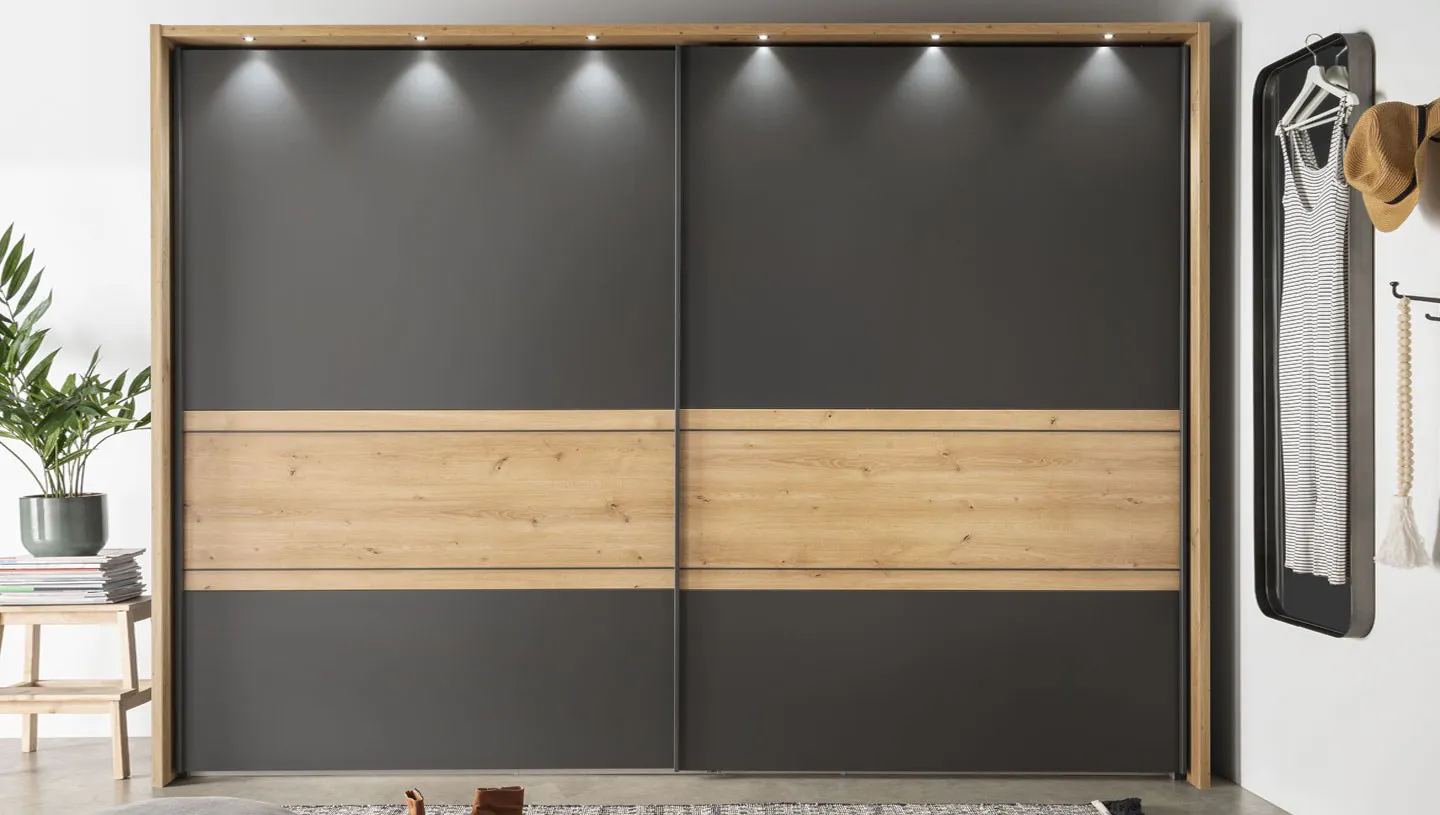
One of the most useful ideas for small bedrooms is to replace traditional hinged doors with sliding doors.
Hinged wardrobe doors need space in front of the wardrobe to open fully. In a compact bedroom, that can interfere with the bed, bedside table or walking area.
Sliding doors move across the front of the wardrobe, reducing the amount of clearance required.
This makes them particularly useful when the wardrobe has to sit close to other furniture.
Why choose a sliding wardrobe?
- Saves floor space
- Works well beside beds
- Provides a clean, contemporary appearance
- Available in different widths
- Can accommodate large internal storage areas
- Does not require door clearance
If your bedroom is narrow, a sliding wardrobe can be one of the simplest ways to make the available space work better.
2. Consider a Mirrored Wardrobe
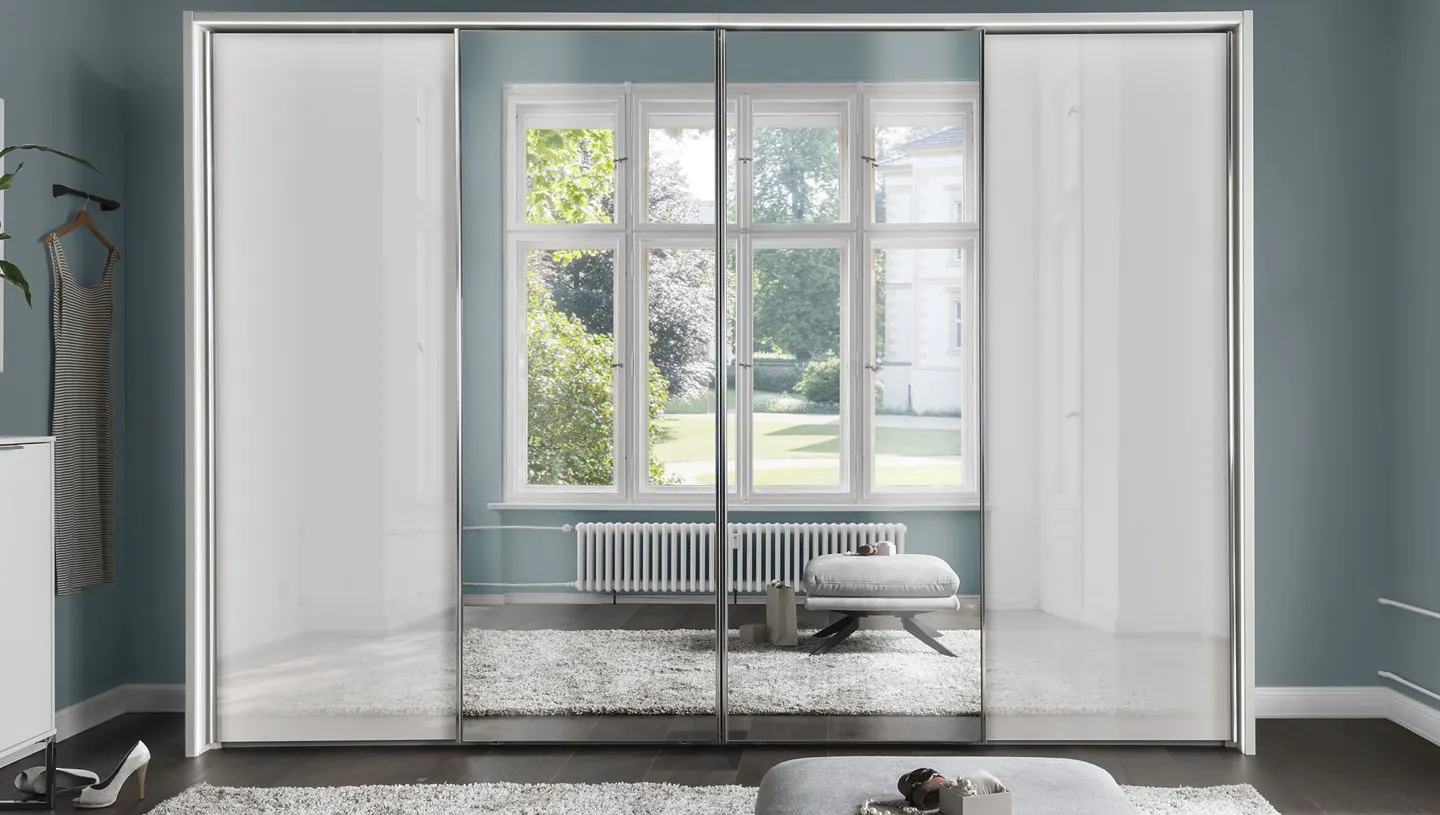
Mirrored wardrobes are another practical option for small bedrooms.
They provide the storage you need while also functioning as a full-length mirror. This can eliminate the need to find additional floor or wall space for a separate mirror.
Mirrors can also reflect natural and artificial light, creating a greater sense of depth within the room.
Are mirrored wardrobes good for small bedrooms?
Yes, particularly when you want to make a compact room feel more open.
However, the mirror should not be the only reason you choose a wardrobe. Look at its internal storage, dimensions and construction as well.
A beautifully mirrored wardrobe is still not practical if it does not provide enough space for your clothes.
3. Make the Most of Vertical Space
When floor space is limited, look upwards.
A taller wardrobe can provide considerably more storage without taking up a larger footprint.
The upper sections can be used for items you do not need every day, such as:
- Seasonal clothing
- Suitcases
- Spare bedding
- Occasionwear
- Winter accessories
- Storage boxes
Keep everyday clothing within easy reach and reserve the highest sections for less frequently used belongings.
This simple approach can help you get more storage from the same amount of floor space.
4. Choose the Right Wardrobe Width
The widest wardrobe you can fit is not necessarily the best wardrobe for a small bedroom.
Before choosing a size, measure the wall carefully.
You need to account for:
- Bed position
- Doorways
- Windows
- Radiators
- Skirting boards
- Walkways
- Furniture clearance
A wardrobe that technically fits against the wall can still make the room difficult to use if there is not enough space around it.
A simple rule
Think about the entire room rather than the wardrobe in isolation.
A slightly narrower wardrobe that allows comfortable movement may be a better choice than a larger one that leaves the bedroom feeling cramped.
5. Think About the Wardrobe Interior
The outside of a wardrobe is only half the story. What matters is the wardrobe interior
Two wardrobes with similar dimensions can offer very different amounts of usable storage depending on their internal configuration.
Look for a combination of:
- Hanging rails
- Shelves
- Drawers
- Shoe storage
- Adjustable shelving
- Upper storage compartments
Think about the clothes you actually own. If you have a large collection of dresses, coats or suits, you may need more hanging space. If you mostly wear folded clothing, prioritise shelving and drawers.
Storage should match your wardrobe
Do not choose the internal layout based only on how it looks in a photograph.
Think about how you will use it every morning.
A wardrobe is efficient when you can see, reach and organise your belongings easily.
6. Choose Sliding Wardrobes for Narrow Bedrooms
Narrow bedrooms can be particularly difficult to furnish because there may be very little space between the bed and the wardrobe.
A sliding wardrobe can help because the doors do not extend into this narrow walkway.
For a long, narrow bedroom, consider placing the wardrobe along the shorter wall if the layout allows.
This can help maintain a clearer central walkway.
However, every room is different, so measure the actual layout before deciding where the wardrobe should go.
7. Use Light-Coloured Wardrobes
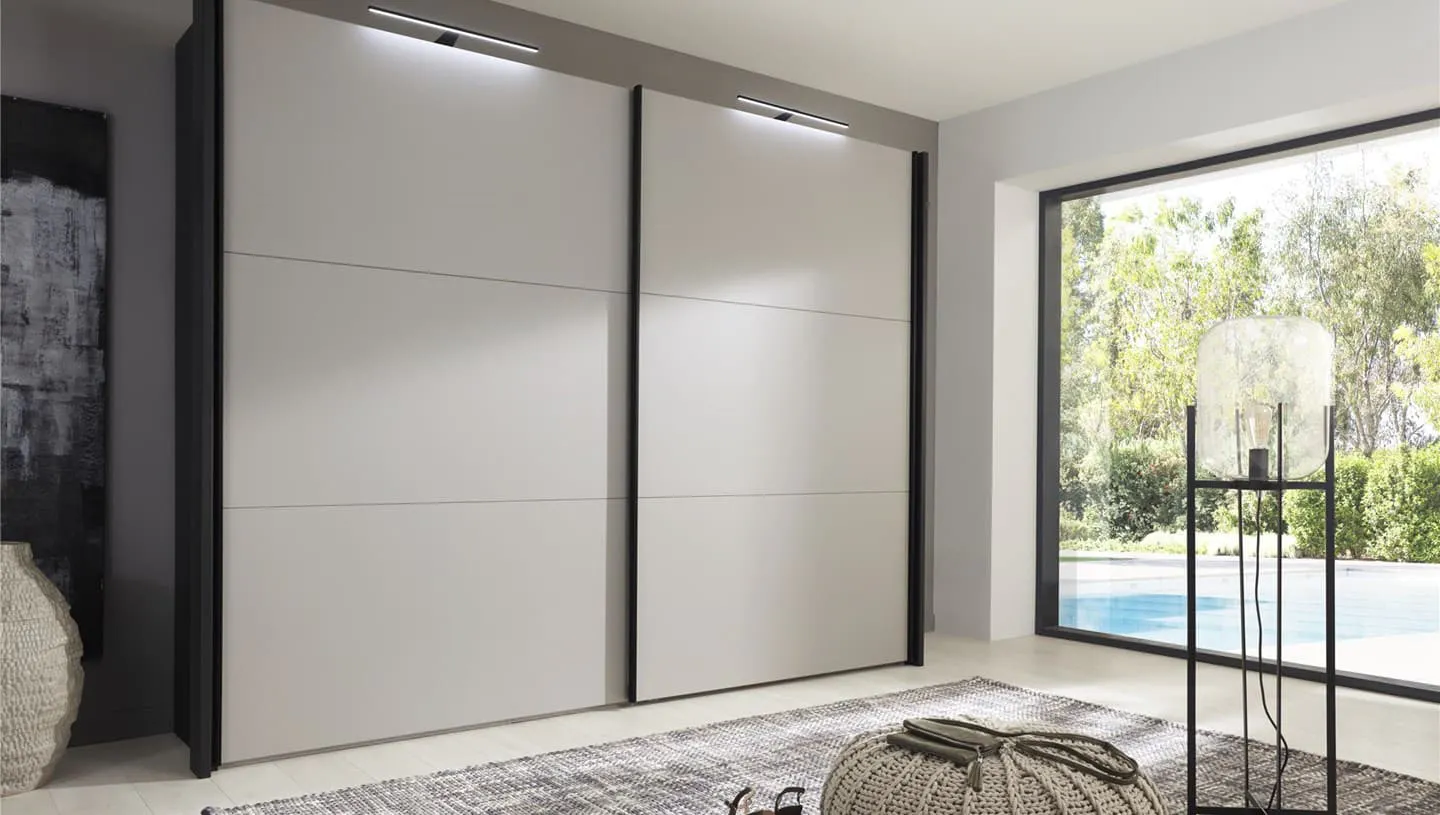
Furniture colour can affect how a small bedroom feels.
Light and neutral wardrobe finishes can blend more easily with the surrounding walls, creating a calmer appearance. White, cream, soft grey and light wood finishes can work particularly well in compact rooms. This does not mean dark wardrobes are unsuitable.
A darker wardrobe can create a striking focal point, particularly in a bedroom with plenty of natural light. The important thing is to consider the wardrobe alongside the walls, flooring, bed and other furniture.
8. Use Mirrored Doors to Add Visual Depth
If your bedroom feels particularly enclosed, mirrored wardrobe doors can be useful.
A mirror reflects parts of the room, which can create the impression that the space extends further than it actually does.
Where possible, position mirrors so they reflect natural light or a visually attractive part of the room.
Avoid creating reflections of cluttered areas, as this can have the opposite effect.
9. Choose a Wardrobe That Matches the Bed
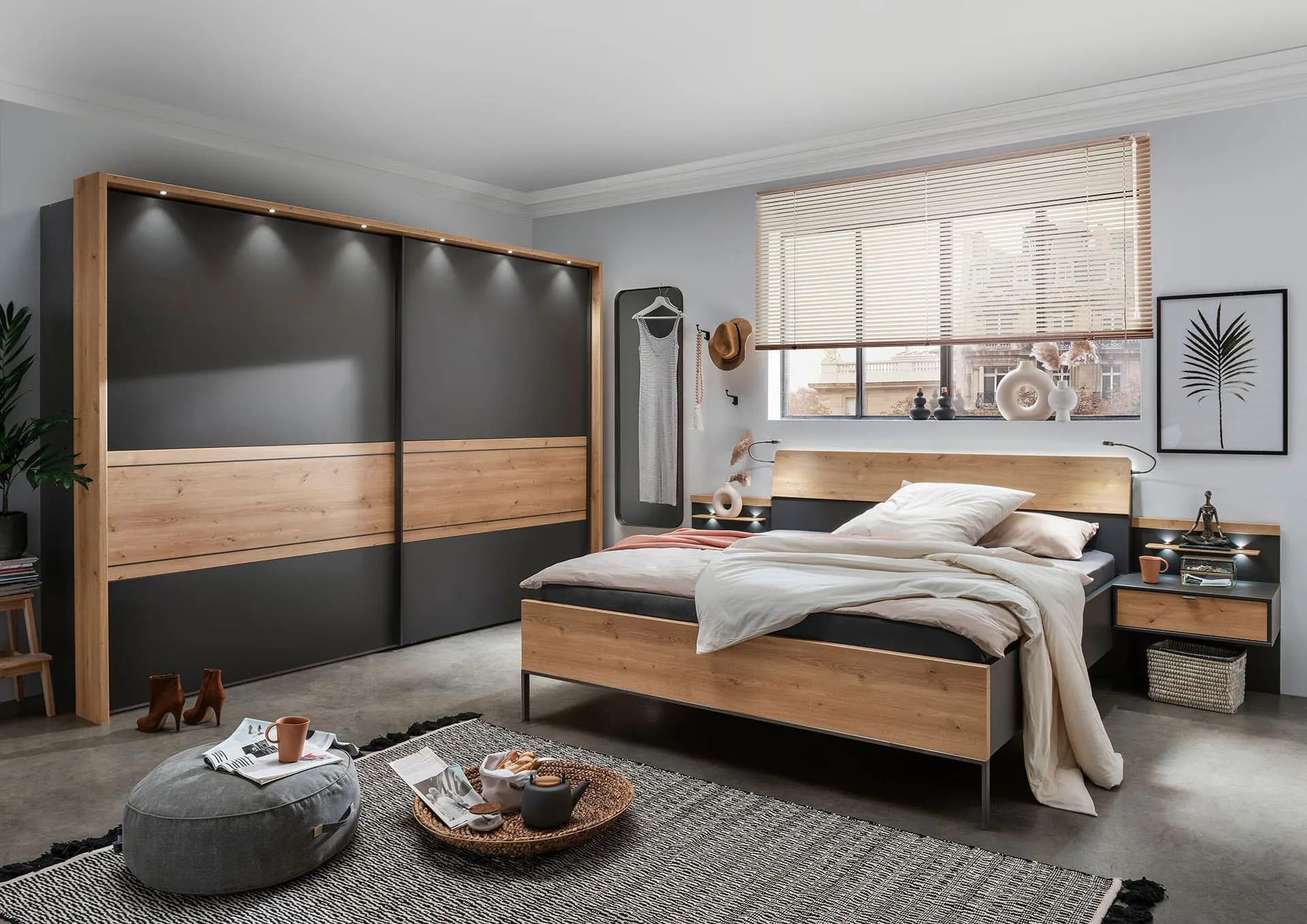
The wardrobe is often one of the largest pieces of bedroom furniture, so it needs to work with the bed rather than compete with it.
Consider the relationship between:
- Wardrobe finish
- Bed frame
- Headboard
- Bedside tables
- Chest of drawers
- Flooring
You do not need everything to match perfectly. Instead, look for a common element such as colour, material or shape. For example, a warm wood wardrobe can work well with a wooden bed frame, while a neutral wardrobe can complement an upholstered bed.
11. Consider a Corner Wardrobe
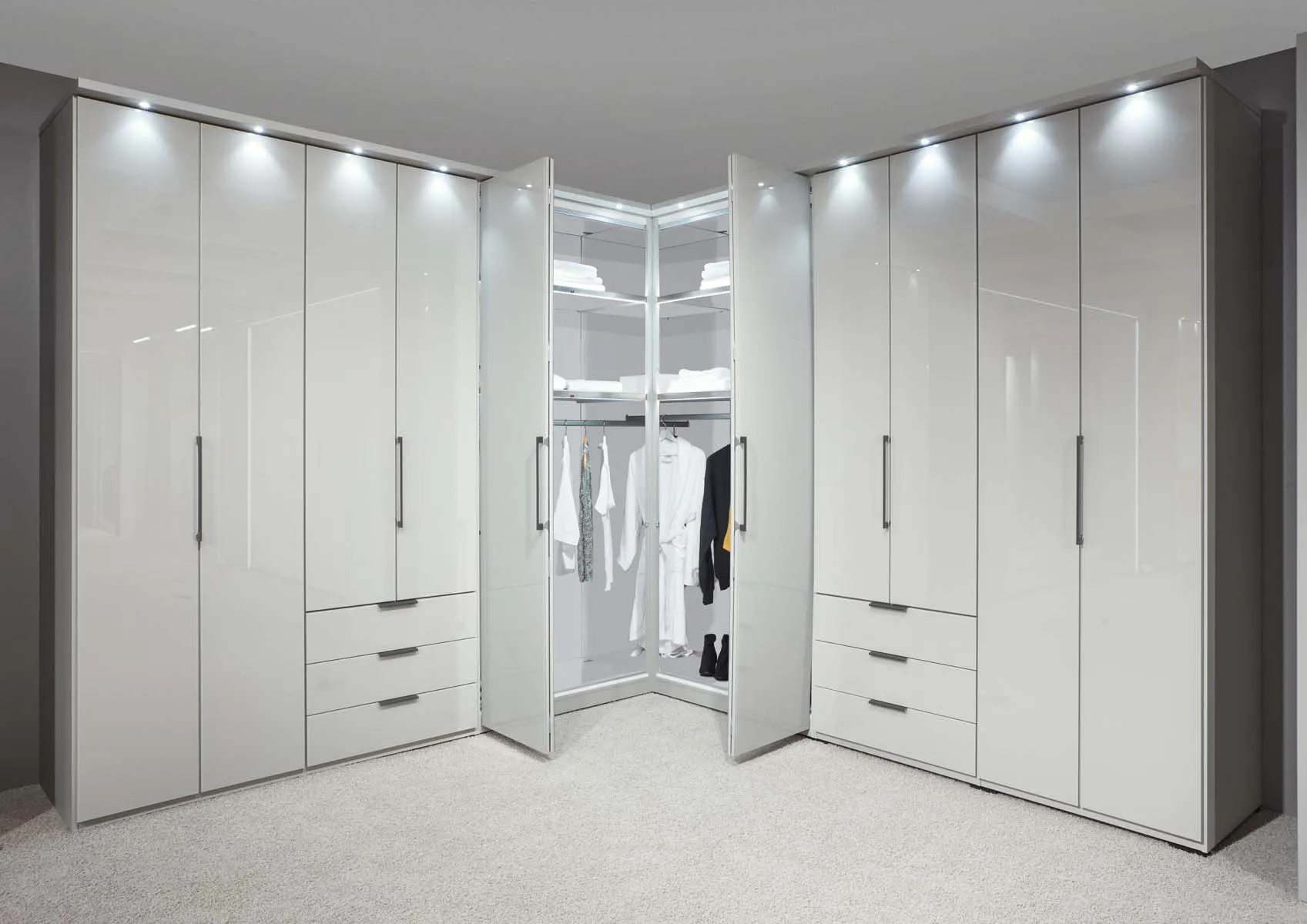
Corners are often difficult spaces to use efficiently.
If your bedroom layout allows it, a corner wardrobe can turn an otherwise awkward area into useful storage.
This can be especially helpful when a conventional wardrobe would interfere with the bed or door.
However, corner wardrobes can sometimes have less accessible internal space, so check the layout carefully before choosing one.
12. Use Wardrobe Doors as Part of the Design
Wardrobe doors cover a large visual area, so their finish can significantly influence the room.
Consider:
Mirrored doors
Best for creating visual depth and combining storage with a full-length mirror.
Plain doors
A simple choice for minimalist and contemporary bedrooms.
Wood-effect doors
Useful for adding warmth and texture.
Neutral finishes
Can help the wardrobe blend into the room.
The best choice depends on the overall style you want to create.
13. Keep the Area Around the Wardrobe Clear
Even the best wardrobe will not make a small bedroom feel spacious if the area around it is cluttered.
Avoid placing unnecessary furniture directly in front of the wardrobe.
Make sure drawers, doors and sliding panels can be used comfortably.
If possible, keep the floor around the wardrobe clear.
This improves both the appearance and functionality of the room.
14. Use the Wardrobe for More Than Clothes
A well-planned wardrobe can store far more than everyday clothing.
Depending on its internal configuration, you can also use it for:
- Shoes
- Handbags
- Accessories
- Bedding
- Towels
- Seasonal items
- Jewellery
- Luggage
This can reduce the need for additional storage furniture elsewhere in the bedroom.
15. Avoid Choosing a Wardrobe Based on Appearance Alone
A wardrobe can look perfect online and still be unsuitable for your bedroom.
Before buying, consider:
Dimensions: Will it physically fit?
Clearance: Can you comfortably open the doors or use the sliding panels?
Storage: Does the interior suit your clothing collection?
Height: Can you make use of the available wall height?
Style: Does it work with your existing furniture?
Access: Can the wardrobe be delivered into the room?
Taking a few minutes to check these details can prevent an expensive mistake.
Sliding vs Hinged Wardrobes for Small Bedrooms
The door style can make a noticeable difference in a compact room.
| Feature | Sliding Wardrobe | Hinged Wardrobe |
|---|---|---|
| Floor clearance | Low | Higher |
| Small bedroom suitability | Excellent | Good |
| Access to entire wardrobe | One section at a time | Full access |
| Door style | Contemporary | Traditional and contemporary |
| Space beside bed | More forgiving | Requires more clearance |
| Mirror options | Widely available | Widely available |
Sliding wardrobes
Best when floor space is limited and you want to keep the area in front of the wardrobe clear.
Hinged wardrobes
A good option if you have sufficient clearance and prefer being able to open the entire wardrobe at once.
Neither is universally better.
The right choice depends on the layout of your bedroom.
How Much Wardrobe Space Do You Need?
The amount of wardrobe space you need depends on your clothing collection rather than simply the size of your bedroom.
A useful starting point is to consider how much hanging and folded storage you currently use.
Ask yourself:
- How many clothes need to be hung?
- How much folded clothing do you have?
- Do you need space for long garments?
- Do you need shoe storage?
- Do you store bedding in the wardrobe?
- Do you share the wardrobe with someone else?
- Do you need space for seasonal clothing?
If two people share a bedroom, dividing the wardrobe into clearly defined sections can make it easier to keep everything organised.
Best Wardrobe Ideas for Different Small Bedroom Layouts
| Bedroom type | Wardrobe idea |
|---|---|
| Very narrow bedroom | Sliding wardrobe |
| Small bedroom with limited clearance | Sliding wardrobe |
| Small bedroom needing a mirror | Mirrored wardrobe |
| High ceilings | Tall wardrobe |
| Awkward alcove | Built-in wardrobe |
| Small room with little floor space | Tall or sliding wardrobe |
| Shared bedroom | Wide wardrobe with divided storage |
| Bedroom with an unused corner | Corner wardrobe |
Small Bedroom Wardrobe Planning Checklist
Before choosing your wardrobe, work through this checklist:
☐ Measure the available wall
☐ Measure the distance between the wardrobe and bed
☐ Check door and window positions
☐ Account for radiators and skirting boards
☐ Decide between sliding and hinged doors
☐ Measure the wardrobe height
☐ Think about your hanging and folded clothing
☐ Consider whether you need drawers
☐ Decide whether mirrored doors would be useful
☐ Check the wardrobe's delivery dimensions
☐ Make sure there is enough room to use the wardrobe comfortably
Key Takeaways
- Sliding wardrobes are often one of the best choices for small bedrooms because they need less clearance.
- Mirrored wardrobes can combine clothing storage with a full-length mirror.
- Tall wardrobes make better use of vertical space.
- Choose wardrobe interiors according to the clothes and belongings you actually own.
- Do not automatically choose the widest wardrobe that will fit.
- Built-in wardrobes can make excellent use of awkward spaces and alcoves.
- Light or neutral finishes can help a wardrobe blend into a compact room.
- Keep the area around the wardrobe clear so the room remains easy to move around.
- Consider the wardrobe alongside the bed and other furniture rather than choosing it in isolation.
- Measure everything carefully before ordering.
Final Thoughts
The best wardrobe ideas for small bedrooms are the ones that give you more storage without making the room harder to use.
For many compact bedrooms, a sliding wardrobe is a practical starting point because it reduces the clearance needed in front of the doors. Mirrored wardrobes can be useful when you also need a full-length mirror, while tall designs allow you to take advantage of otherwise unused vertical space.
But the right wardrobe is not simply about choosing the biggest storage unit available.
Think about the dimensions of your room, how you move around it and what you actually need to store. A well-organised wardrobe that fits comfortably into the room is far more useful than a larger one that dominates the space.
Once you have the practical elements right, consider the finish. A wardrobe that complements your bed, flooring and other furniture will feel like part of the bedroom rather than a bulky storage unit added afterwards.
With careful planning, even a small bedroom can have generous clothing storage while still feeling open, comfortable and uncluttered.
Explore Head2Bed's wardrobe collection to find practical wardrobe solutions for bedrooms of different sizes and layouts.
Frequently Asked Questions
What is the best wardrobe for a small bedroom?
A sliding-door wardrobe is often a practical choice for a small bedroom because the doors do not require additional floor space to open. Tall and mirrored wardrobes can also help maximise storage and functionality.
Are sliding wardrobes better for small bedrooms?
Sliding wardrobes can be particularly useful in small bedrooms because they require less clearance in front of the wardrobe. This can make it easier to position them close to the bed or other furniture.
Do mirrored wardrobes make a small bedroom look bigger?
Mirrored wardrobes can create a greater sense of visual depth by reflecting light and parts of the room. They can also remove the need for a separate full-length mirror.
How big should a wardrobe be for a small bedroom?
The wardrobe should be large enough to meet your storage needs while leaving comfortable space to move around the room. Always measure the wall, bed position and available clearance before choosing a size.
Are fitted wardrobes better for small bedrooms?
Fitted wardrobes can be useful because they can be designed around the dimensions of the room. They can make efficient use of awkward areas such as alcoves, corners and sloping ceilings.
How can I maximise wardrobe space in a small bedroom?
Use the full height of the wardrobe, organise hanging and folded clothing separately and use shelves, drawers and upper compartments efficiently. Slim hangers and storage boxes can also help.
What colour wardrobe is best for a small bedroom?
Light and neutral finishes can help a wardrobe blend into a compact room, while mirrored surfaces can create additional visual depth. However, darker furniture can also work if it complements the rest of the room.
Should a wardrobe be taller or wider?
In a small bedroom, a taller wardrobe can often provide more storage without taking up additional floor space. However, the best dimensions depend on your room height, wall width and storage requirements.
Can I put a wardrobe next to my bed?
Yes, provided there is enough space to access both the wardrobe and the bed comfortably. Sliding wardrobes can be particularly useful when the wardrobe needs to sit close to the bed.
How do I choose a wardrobe for a narrow bedroom?
Measure the available wall and the clearance between the wardrobe and other furniture. A sliding wardrobe is often a practical option because its doors do not swing into the available walkway.